©
Date
Sep 2021
Client
National Museum of Australia
Industry
Museum
Timeline
2 Months
The Opportunity
As part of the Great Southern Land exhibition at the National Museum of Australia, this project required the development of visual graphics, typographic and illustrative components to be included in the Termitarium installation.
Over an intensive two-month period, Artikel developed a visual solution to this educational and visual design opportunity, translating the complex ecological systems of termites into a tactile, visually engaging visitor experience.


The Outcome
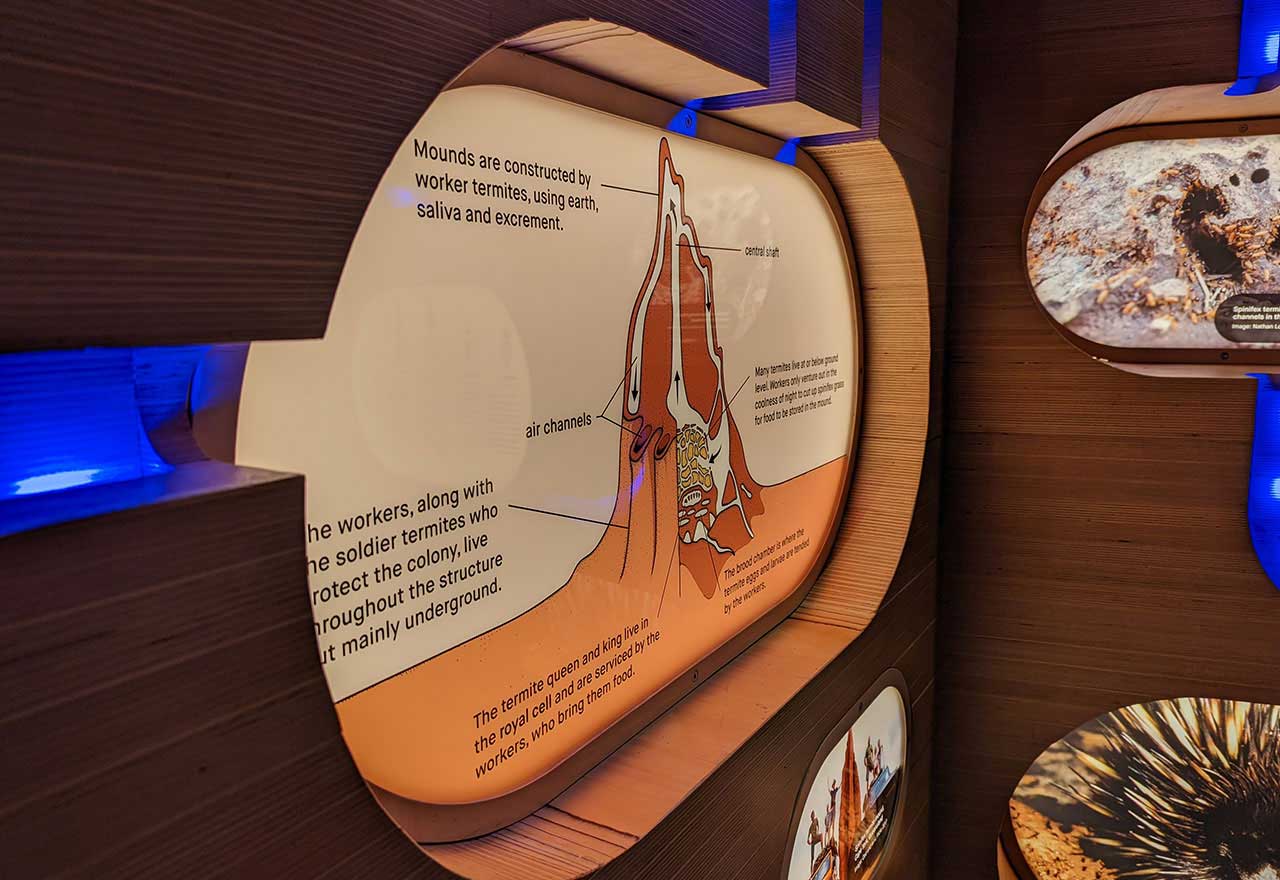
Termitarium presents audiences with a stylised to-scale recreation of a termite mound, produced by Local Projects with designs by Artikel, incorporated in the open cross-section that draws viewers into the installation.
Here, at the rear of the termite mound, 7 hollowed cubbies containing backlit panels inlay the wooden framework. Each panel explores a specific function or feature of termite mound formations, such as airflow and temperature regulation, using informational text, photography or illustrative elements. These visual elements were thoughtfully composed and then mounted onto rounded acrylic panes, which are embedded into the structure at varying depths to create visual interest and increase content engagement. The hollowed cubbies are linked together by neon-lit channels that transition between glowing shades of red to blue, representing the heating and cooling systems designed by termites to thermoregulate their habitats.


Conclusion
Balancing clarity and curiosity, the graphics and layout were designed with accessibility and engagement in mind, aiming to support discovery-based learning.
A standout feature within the Great Southern Land exhibition, Termitarium has proven popular with visitors of all ages. Artikel’s contribution supports the overall atmosphere of the gallery experience while fulfilling the project’s educational purpose by translating complex scientific content into compelling and accessible visual storytelling.

Latest projects